Ca' Lojera, Lugana, 2024
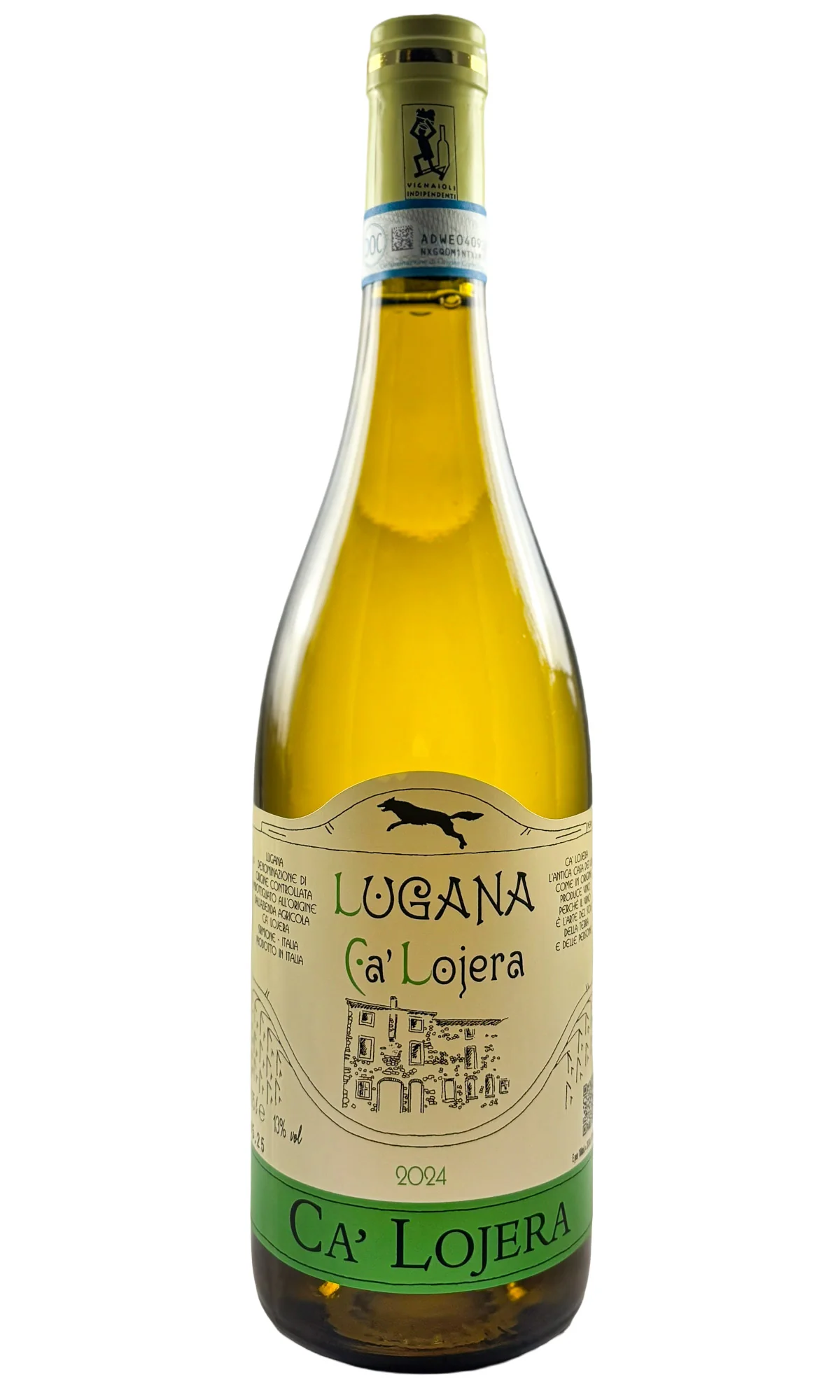
One of Lugana's most reliable benchmarks. Ca' Lojera sits on the southern shore of Lake Garda, where Ambra and Franco Tiraboschi founded the estate in 1992 — naming it 'House of the Wolf' after a local smugglers' legend. They farm 18 hectares of white clay soils, with Turbiana (the local name for what's essentially a Verdicchio cousin, despite the 'Trebbiano di Lugana' alias) trained to traditional pergola on vines averaging 40 years. Everything is hand-harvested, fermented and aged in stainless steel to preserve the grape's natural cut. The result is Lugana the way it should taste — apple and citrus and lake-breeze freshness, with the chalky, almost saline grip that white clay tends to deliver. A go-to for anyone who finds Pinot Grigio too quiet and Vermentino too loud.
Ca' Lojera, Lugana, 2024
One of Lugana's most reliable benchmarks. Ca' Lojera sits on the southern shore of Lake Garda, where Ambra and Franco Tiraboschi founded the estate in 1992 — naming it 'House of the Wolf' after a local smugglers' legend. They farm 18 hectares of white clay soils, with Turbiana (the local name for what's essentially a Verdicchio cousin, despite the 'Trebbiano di Lugana' alias) trained to traditional pergola on vines averaging 40 years. Everything is hand-harvested, fermented and aged in stainless steel to preserve the grape's natural cut. The result is Lugana the way it should taste — apple and citrus and lake-breeze freshness, with the chalky, almost saline grip that white clay tends to deliver. A go-to for anyone who finds Pinot Grigio too quiet and Vermentino too loud.
Product Information
Product Information
Shipping & Returns
Shipping & Returns
Description
One of Lugana's most reliable benchmarks. Ca' Lojera sits on the southern shore of Lake Garda, where Ambra and Franco Tiraboschi founded the estate in 1992 — naming it 'House of the Wolf' after a local smugglers' legend. They farm 18 hectares of white clay soils, with Turbiana (the local name for what's essentially a Verdicchio cousin, despite the 'Trebbiano di Lugana' alias) trained to traditional pergola on vines averaging 40 years. Everything is hand-harvested, fermented and aged in stainless steel to preserve the grape's natural cut. The result is Lugana the way it should taste — apple and citrus and lake-breeze freshness, with the chalky, almost saline grip that white clay tends to deliver. A go-to for anyone who finds Pinot Grigio too quiet and Vermentino too loud.


