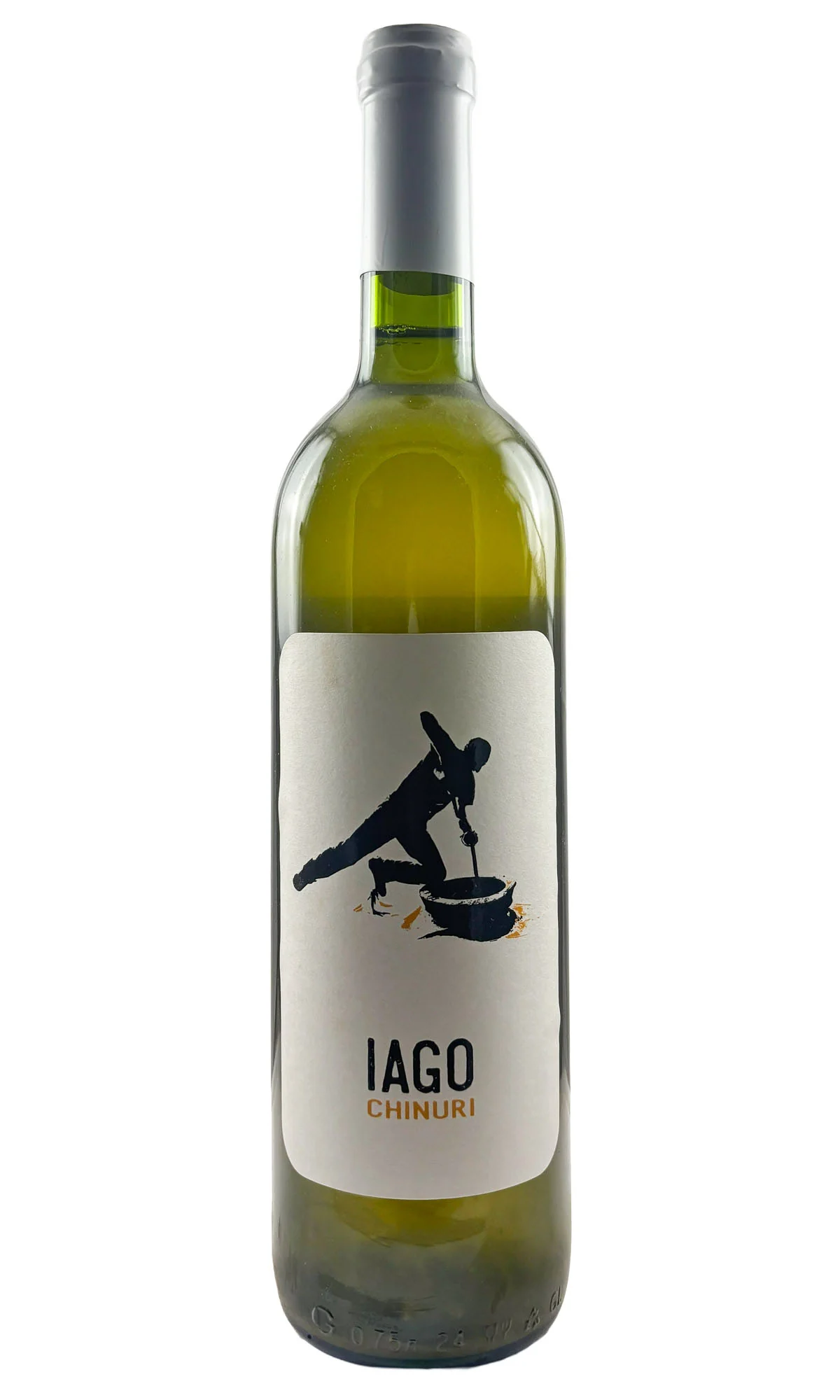
Iago, Chinuri Amber, 2023
Amber wine from the man who helped revive Georgia's ancient qvevri tradition. Iago Bitarishvili works with a single indigenous grape, Chinuri, on his small estate in Chardakhi in the Kartli region, and in 2005 became the first certified-organic vineyard in the country. This is the skin-contact version: the grapes ferment and age for roughly six months on their skins in qvevri, the egg-shaped clay vessels buried underground, which gives the wine its amber color and a gently tannic, tea-like grip. Production is tiny, capped by the cellar at around 10,000 bottles a year. It's living wine history in a glass, and a delicious entry point to one of the world's oldest winemaking cultures.
Iago, Chinuri Amber, 2023
Amber wine from the man who helped revive Georgia's ancient qvevri tradition. Iago Bitarishvili works with a single indigenous grape, Chinuri, on his small estate in Chardakhi in the Kartli region, and in 2005 became the first certified-organic vineyard in the country. This is the skin-contact version: the grapes ferment and age for roughly six months on their skins in qvevri, the egg-shaped clay vessels buried underground, which gives the wine its amber color and a gently tannic, tea-like grip. Production is tiny, capped by the cellar at around 10,000 bottles a year. It's living wine history in a glass, and a delicious entry point to one of the world's oldest winemaking cultures.
Product Information
Product Information
Shipping & Returns
Shipping & Returns
Description
Amber wine from the man who helped revive Georgia's ancient qvevri tradition. Iago Bitarishvili works with a single indigenous grape, Chinuri, on his small estate in Chardakhi in the Kartli region, and in 2005 became the first certified-organic vineyard in the country. This is the skin-contact version: the grapes ferment and age for roughly six months on their skins in qvevri, the egg-shaped clay vessels buried underground, which gives the wine its amber color and a gently tannic, tea-like grip. Production is tiny, capped by the cellar at around 10,000 bottles a year. It's living wine history in a glass, and a delicious entry point to one of the world's oldest winemaking cultures.


